Wednesday, November 26, 2014

Try These Tricks in Your Living Room

"IMG_1016" by Shawn Cornelius is licensed under CC BY 2.0
Holiday decorating usually leads to rearranging some furniture, which doesn’t sound like a lot of fun on the surface. However, this allows you the opportunity to experiment with the layout of the room and its furniture. Or maybe you’ve been looking for an excuse to switch things around, so you should take advantage of the opportunity! Try these tips from Apartment Therapy, and who knows, you may love your new layout so much that you decide to keep the Christmas tree up year-round!  
1. If you have room, pulling your furniture away from the wall can make conversational groupings seem cozier, and the room seem a lot more spacious.


2. Try replacing your coffee table with a smaller table, big enough to hold a book and a few drinks, that can move around the room. The space freed up by the coffee table will make your living room seem a lot bigger.


3. A bookcase behind the sofa is a great way to add a little texture — and a little storage — to your living room. (Naturally, things you don't use as much go directly behind the couch.)


4. Mixing old and new pieces is a great way to add energy to any room.


5. Balance heavier pieces with lighter ones to keep a space from feeling too clunky. The lighter pieces in this room — the coffee and side tables — provide a nice counterpoint the sofa and dresser.


6. Hang a picture ledge above your sofa for a statement-y look. If you get tired of your current pieces, you can easily switch them out.


7. Color is the key to mixing a lot of things together in a harmonious way. There's a lot going on in this living room, but the preponderance of white keeps all the different elements from becoming too overwhelming.


8. Every room can benefit from a touch of gold.


9. Keeping everything low (including the art) is a great trick to make a room look bigger.


10. Paired chairs don't have to match — try mixing two pieces from a similar era with different shapes.


11. When in doubt, add a little bit of black.

Thursday, November 20, 2014

Host a Holiday Happy Hour

"Cocktail anyone?" by Dana Moos is licensed under CC BY 2.0
Whether you’re hosting Thanksgiving or want to have friends and family from out-of-town over for a gathering, happy hour is the way to go! Why? It’s cheaper, more casual and less stressful - especially if you’re cooking Thanksgiving dinner, too. Follow this advice from The Kitchn for a happy Happy Hour!

1. Buy your appetizers.
The last thing you need is one more recipe to make! Pick up some shrimp and set it out with a quality cocktail sauce. Buy some nice pickles and ask a friend to set them out with good crackers. Keep it easy.

2. Ask someone else to bring the appetizer.
Or, instead of buying the appetizer at all, delegate your most prompt and on-time friend to get to your house a little early with a platter of something tasty.

3. Pitcher cocktails are the way to go!
If you want to go past beer and wine, then don't just set out a few bottles of booze. Make a pitcher cocktail the night before; no mixing, no shaking, and very festive!


4. Keep the appetizers very light.
Think crunchy and cold, not savory and hot. Think pickles, not cheese balls. Think shrimp, not hot dip. For our California Thanksgiving Outdoors we made some simple boards or relish trays with pickles, light chickpea dip with fresh vegetables for dipping, and some crackers. All very easy and pretty! Read some more of our readers' favorite Thanksgiving appetizers here:


5. Designate a host to keep an eye on appetizers and drinks.
Last but not least, you shouldn't be refilling ice buckets or sangria pitchers while trying to make gravy. Designate your partner or a friend to play host and make sure everyone is having a good time with a glass topped off.

Thursday, November 13, 2014

Pumpkin Pie Mug Cake

Photo courtesy Faith Durand, The Kitchn
The snow is falling and it’s beginning to feel like holiday season. We still have a couple of weeks to go until Thanksgiving, but that doesn’t mean you can’t indulge a little today! One of the things we look forward to most is the home-made pumpkin pie. This is a great recipe from The Kitchn to use if either cannot wait for Thanksgiving, or to file away for the rest of winter when you need a comforting dessert!


Pumpkin Pie Mug Cake
Makes 1


1 teaspoon unsalted butter
14 grams gingersnaps (2 small cookies), crushed into 2 tablespoons of crumbs
1/3 cup pumpkin puree
1 large egg
1 tablespoon milk or cream
2 tablespoons brown sugar
1 teaspoon pumpkin pie spice


Place the butter in a microwave-safe mug that holds at least 10 ounces, and microwave on LOW until melted. Stir in the crushed gingersnaps and press the mixture firmly into the bottom of the mug.


In a separate small bowl, whisk together the pumpkin puree, egg, milk or cream, brown sugar, and pumpkin pie spice. Pour into mug with the gingersnap "crust."


Place the mug on a microwave-safe plate. Microwave on full power for 2 to 5 minutes, or until a knife inserted in the center of the mug pie comes out clean. The top may look slightly damp but it will set as it cools. (Cooking time will vary greatly depending on your microwave and the width and depth of the mug. Start with 2 minutes and continue cooking in 30-second increments until it is done.)


Use a hot pad or oven mitt to carefully remove the mug from the microwave. Let it stand for a couple minutes to cool, then top, if desired, with whipped cream and crushed nuts before eating.


Recipe Notes
Doubling the recipe: You can double this recipe, but only cook one mug pie in the microwave at a time.

Thursday, November 6, 2014

Cold & Flu Season Kitchen Essentials

"Tea for two" by Naama ym is licensed under CC BY-SA 2.0
Whether we want to think about it or not, cold and flu season is right around the corner. When you’re not feeling your best, the last thing you want to do is leave the house. So while you’re healthy, make sure you stock up on these sick day essentials, courtesy of The Kitchn, so that you’re back to health as quickly as possible!

The Drink Essentials
Herbal Tea: Make sure your stash is well-stocked, as herbal tea is probably the #1 go-to drink for most of us when we get sick. Black and green teas are nice too, but don't soothe the throat quite as well.

Honey: Tea by itself is fine, but tea with honey is extra soothing...

Lemons: ... and even more so if you add a squeeze of lemon. In fact, why not just go ahead and make this ginger honey and lemon tonic? The shot of whiskey in the recipe is optional, but highly recommended. (Trust me.)

Ginger and/or High-Quality Ginger Ale: You'll want fresh ginger for the tonic above, or to make any one of these stomach-soothing teas. You may also want to pick up a bottle or two of high-quality ginger ale — the kind made with real ginger, not just ginger flavoring and sugar — when you're feeling like a little light carbonation would be helpful.

Orange juice or oranges: Give yourself an extra shot of vitamin C with a glass of orange juice, even better if it's freshly-squeezed. (But hey, you're sick! Do whatever is easiest.)

The Food Essentials
Chicken soup: It's not all in your head; there's scientific proof that chicken soup really does help soothe cold symptoms, so buy a few cans for your pantry, or make and freeze a big homemade batch. Looking for the perfect soup recipe? Try one of these → 5 Soups to Soothe a Cold and From Chicken Noodle to Egg Drop: 10 Soothing Broth-Based Soups.

Applesauce: An essential part of the BRAT diet, applesauce is low in fiber but has lots of calories, so it's easy on a delicate stomach.

Bread for toast: Keep a loaf of sliced bread in your freezer, and you'll be so glad you have some bread around when you can't keep anything else down.

Quick-prep frozen meals: If your stomach isn't the problem and you're just wallowing in a head cold, quick-prep frozen meals (like these Trader Joe's recommendations) mean you can get some food in your system fast. You can also reheat one of these excellent freezer meals.

Your favorite comfort foods: This is different for everyone. What makes you feel good when you're sick? Maybe it's something from childhood, like mashed potatoes or a bowl of ramen noodles. Whatever it is, pick it (or the ingredients to make it) up the next time you go to the grocery store.

Do you have any secret cold and flu fighters?

Friday, October 31, 2014

5 Ways to Cut Energy Costs

"home office closeup" by megan ann is licensed under CC BY 2.0
While it’s wonderful to live in an age with so much technology at our fingertips, these devices also use a lot of energy. Not only does this have a potentially negative impact on the environment, but it costs us more money on our electric bills each month, too. So how can we conserve energy and save money without feeling like we’re sacrificing our dependency on technology? Try these tips from Apartment Guide:

1. Unplug
It goes without saying that turning off the lights when you don’t need them can reduce the cost of your electric bill–but did you know that simply unplugging your appliances can help reduce costs, too? Of course, you don’t want to unplug things that need to stay plugged in like the refrigerator.

However, unplugging phone chargers, toasters, hair dryers, and other small appliances when they’re not in use can shave dollars off your electric bill every time. Consider getting timed surge protectors or outlet additions that can turn off and on things that you don’t need to use while you’re not home, like television cable boxes, modems, routers and the microwave.

2. Cool Naturally
One of the biggest uses of electricity in a home, particularly during the summer, is the air conditioning. Nearly all air conditioners–whether they are window units that can be turned on and off, or they are controlled centrally by a thermostat–use electric power to run.

While some hot days are unbearable and it’s impossible to go without a/c, on more temperate days, try to cool your home naturally. Open windows, block sun from streaming in windows, and use fans. Try opening two windows; then place a fan backward in one open window to draw hot air out. This will allow the cool air from the other open window to flow in freely.

3. Go Green
If you use a lot of lights in your apartment, one way to reduce your electric bill is to use eco-friendly light bulbs. There are lots of eco-friendly light bulbs available, and they’re much more durable, long lasting, and environmentally-conscious.

Fluorescent light bulbs are not only better for the environment, they’re also better for your bank account. Switch your regular bulbs out for fluorescent ones; then reduce their usage as much as possible. Consider trying different fluorescent bulbs to find just the right color for your home (some can be very bright).

4. Upgrade and Update
New appliances are much more energy efficient and responsible than older appliances. You may not be able to upgrade major appliances in an apartment, but that doesn’t you don’t have any control. Some minor appliances whose newer models tend to be much more eco-conscious include computers, televisions, hair dryers, hair straighteners, toasters and blenders.

5. Clean Your Filters
Your air conditioner has a filter in it that keeps things like dust and dirt from blowing into the air. However, it needs to be changed regularly, and some people try to save money by not replacing the filter. In reality, a dirty filter is not only bad for your lungs, but it can also drive your electricity bill way up.

Full filters make air conditioners inefficient, causing them to work harder (or you to turn them on a higher setting) in order to make your space cool. If your “change filter” light is on, or if you haven’t changed yours in a while, check with your landlord to see if he has a replacement filter for you (or, if the air conditioner belongs to you, head to a hardware store to get a new one). You’ll spend much more on cooling your space with a dirty filter than you will on the one time expense of buying a brand new one.

Thursday, October 23, 2014

15 Cooking Tricks of the Trade


"Cooking up some delicious" by Kelly Sikkema is licensed under CC BY 2.0
With the holidays quickly approaching, you will undoubtedly be spending a lot of time in the kitchen. You don’t have to be a trained chef to be a good cook, but it is very easy to burn or over-season meals, among other minor kitchen snafus. Regardless of how skilled or experienced of a chef you are (that’s what the internet is for), be sure to keep these tips from House Beautiful in mind, and your meal cannot go wrong!


1. Master mise en place.
This might be the most important tip of all. “Mise en place” is French for “everything in place.” What it means to a chef? Before you cook, have everything measured, peeled, chopped, pans greased, etc. and within reach. This will keep you from running around looking for the dried basil while your sauce is on the brink of burning.


2. A sharp knife is essential.
Sharpen it on a regular basis and hone in between sharpening. Dull knives are dangerous and make cutting much more difficult.


3. Taste as you go.
You should know what the dish tastes like before serving it. Sometimes a little more salt or a dash of spice brings perfection. Which brings us to the next tip…


4. Salt as you go.
Don’t be afraid of salt! Since you’re cooking a fresh meal instead of eating a packaged one, you’re starting out with much less sodium to begin with.


5. But lose the salt shaker.
Use a small bowl of kosher salt and add pinches as you cook and taste. It’s easier to control the amount and ensures even coverage.


6. Tongs are an extension of your hand.
Walk into any restaurant kitchen and you’ll see a set of tongs in almost every cook’s hand — usually gripped low down on the handle for maximum control. Use it to flip meat, pull a pan out of the oven, stabilize a steak while slicing, the list goes on and on.


7. Put a wet paper towel under a cutting board.
Not only are cutting boards that slide on the counter annoying, they’re extremely dangerous when you’re holding a knife and trying to chop something. Wet a paper towel and lay it under the board and it won’t budge!


8. Sear chicken breast and finish in oven.
Chefs sear a piece of meat, poultry, or fish in a pan and then place it in the oven. Not only does this free up burners, it results in a much moister result.


9. Don’t overcrowd your pan.
When roasting or browning anything, the tendency is to cram as much in the pan as possible — resist! Do it in smaller batches instead. Crowding the pan leads to steaming and lowers the temperature of the pan so you won’t get the caramelization you’re looking for — and that’s where the flavor is.


10. Cook with a 1:1 ratio of butter and oil.
Oil stops the butter from burning and the butter adds richness to the dish.


11. Cut the ends off onions, tomatoes, cantaloupe, etc.
Pretty much do this for any other food that does not stay stable on the cutting board to make a flat surface. This allows you to have complete control of the item as you chop.


12. When baking, only mix until all ingredients are incorporated.
Over-mixing causes toughness by developing gluten in the flour. For light and fluffy cupcakes, only mix until the batter’s come together.


13. Your broiler is basically an upside down grill.
Use it for more than storage!


14. Don’t forget the power of your nose.
If something in the oven smells done but the timer’s still ticking, check on it.


15. Clean as you go.
This simple tip makes a world of difference. Wipe down your cutting board in between items. Not only is it hard to chop something that is swimming in tomato juices, it’s unsafe to chop on a wet surface.

Friday, October 17, 2014

Grocery Planning 101

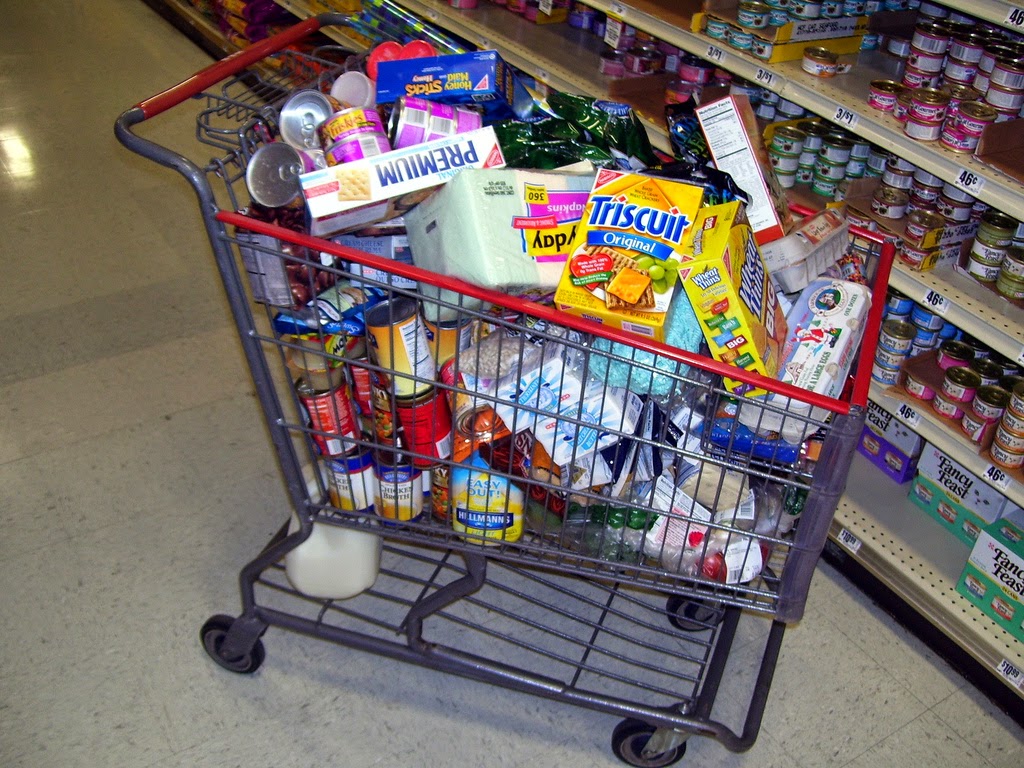
"Thanksgiving Supplies" by Phil! Gold is licensed under CC BY-SA 2.0
We’ve all heard the saying “never go grocery shopping hungry,” but that isn’t the only rule we should keep in mind when we’re at the store. Like many things, the prices of food keeps increasing, so how do we stick to a budget? Heck, how do we even set one in the first place? We’ll demystify grocery shopping in ten steps, with these tips from The Kitchn.

1. Track what you actually spend for a month.
Before you can make a realistic grocery budget, you have to have a realistic idea of what you usually spend. You might spend more on food (including drinks and eating out) than you realize. Start tracking what you spend for a month. Keep your receipts.

Whether you use a spreadsheet or a Word document, or just paper and pencil, it can be helpful to divide your food expenses into itemized lists. Drinks: coffee, tea, soda, alcohol, juices, mixers. Fresh produce. Frozen meals. Baking items. Meat. The key is to track everything that you consume.

2. Budget per month, but plan per week.
I track my income monthly, so I also track grocery bills monthly. Some people track weekly; it's a personal preference. I've found it's easier to stick to a monthly grocery bill, as I often go for two weeks without shopping. On the other hand, it is equally key to plan your meals per week, to avoid eating out or ordering in. I suppose you could plan your meals for an entire month, but for me that's not realistic. Having a rough idea of what we'll be eating for breakfast, lunch, and dinner helps me shop accordingly.

3. Name your priorities.
I'm learning to tell myself, "If this, then not that," as I shop for groceries. There are certain items that I prioritize for my wellbeing, such as fresh foods and basic whole foods. Towards the end of a month, I'll nix fringe items before cutting out my priority items, such as that new flavor of tea, juice, optional toppings for meals, and desserts.

4. Don’t eat out.
Just don't do it. Eating out is the Trojan horse of grocery budgeting. It sneaks into your monthly budget and destroys everything you've worked so hard for. Dramatic, yes, but true. We eat out for special occasions or with friends, but have made it our personal policy to never eat out as a response to laziness. Knowing your priorities and keeping basics, frozen double batches, and quick meals on hand can help with this.

5. Prize (and plan) variety.
...Or you will eat out, unless you have a willpower of steel. Plan variety into your grocery lists to stay well and keep food enjoyable. Some people can eat ramen for a month in the name of saving money. I can't. However, I'm also the kind of person who finds something they love and wants to eat it endlessly... a habit which always results in me tiring of that food for months afterward. So I try to plan budget-friendly meals that I know I'll enjoy, and rotate those meals throughout several months.

6. Keep a fridge list.
Keep a running list on your fridge and write down items that you need as soon as or shortly before you run empty. This is a basic tip but it can make all the difference between grocery runs that result in spending sprees or incomplete shopping.

7. Learn to love your leftovers.
They are your friends. They will feed you while protecting your budget. Invest in a good set of glass food storage containers—your food will last longer with better flavor. Plan meals that make good leftovers, and if you're feeling ambitious, make double or triple batches and freeze.

8. Don’t be duped by coupons.
Coupons are great — if they are for items that you need and from brands that you like. Too often, coupons trick customers into buying unnecessary items "because it's a good deal." Furthermore, generic versions of many items in the coupon book are even cheaper than the price you'll pay for a discounted name brand item. So if you find a coupon for an item that you usually buy, celebrate and purchase. Otherwise, steer clear and seek out cheaper options.

9. Stock when there’s a sale, but don’t overstock.
Sales are the cousin of coupons: they can often dupe customers into buying more because it's "a great deal," not because they need that item or can even use that quantity. On items that keep well, stock up with sales.

But a common mistake is to buy a few extra items of each product, thinking that you're saving time and money by not having to return later to the store. I did this for years before I realized I was still shopping at my usual rate, buying a few extras of this and that each time, which was inflating my grocery bills. Unless you live hours from a grocery store, this sort of pseudo-bulk shopping isn't helpful.

10. Take the time to comparison shop.
The suggestion of comparison shopping is inevitably met with a chorus of voices protesting the efficiency of "driving all over" just to find cheaper items. And I would have to agree. I used to shop at a closer grocery that was more expensive, than transitioned to a larger, cheaper store much further away, then began shopping at three different stores, with a separate list for each. Now I'm back to shopping at the closer store that's a bit pricier. Time and driving costs must always be factored into budgeting. There are still a few items that I will buy once a month at the larger, more distant store, but I don't have the time to go to several stores on each grocery run.

However, I also comparison shop within stores: some items are cheaper in the international aisle, or the yogurt in the organics aisle, for example, might be on sale when my usual yogurt selection isn't. So pick the stores that are most efficient for your shopping, familiarize yourself with your options, and make a plan.

What other grocery shopping tips to you have? Are there any apps you have found useful?
Twitter Delicious Facebook Digg Stumbleupon Favorites More